



Starting wing foiling is much easier when your equipment is balanced from the very beginning. A stable and forgiving setup helps you take off earlier, control the board more easily and build confidence throughout your first sessions.
A beginner setup is based on four key components working together: board volume, front wing size, mast length and wing size. Choosing the right combination allows you to progress faster while making every session more enjoyable.
If you're building your equipment step by step, you can also explore our Complete Wing Foil Setup Guide to better understand how every component works together.
Why the right beginner setup matters
Learning wing foiling means discovering several new sensations at once: balancing on the board, handling the wing and controlling the foil.
The right equipment reduces unnecessary instability so you can focus on developing your technique rather than fighting your gear.
A beginner-friendly setup typically offers:
- Earlier take-offs
- More stable flight
- Predictable touchdowns
- Reduced physical effort in lighter winds
The result is faster progression and more confidence on the water.
Choosing the right board volume
Board volume is the most important parameter when starting wing foiling.
Higher volume boards improve stability before take-off and make it easier to position the wing during the learning phase.
As a general guideline:
-
Riders under 65 kg
board volume: rider weight + 20 to 30 L -
Riders between 65 and 85 kg
board volume: rider weight + 30 to 40 L - Riders above 85 kg
board volume: rider weight + 40 to 50 L
Boards such as the Phantom Cirrus mid-length series provide early lift efficiency and smooth acceleration, making them particularly suitable for accessible progression.
You can explore this further in our wing foil board volume guide.
Choosing the right front wing
The front wing is the main lifting surface of your foil. Its size has a major impact on early take-off, stability and overall riding behaviour.
Larger front wings:
- Generate lift earlier
- Improve pumping efficiency
- Increase low-speed stability
- Perform better in lighter winds
Smaller front wings:
- Increase top speed
- Improve manoeuvrability
- Reduce drag
- Perform better in stronger winds
For beginners, a front wing between 1200 and 1600 cm² generally provides the best balance between stability and progression.
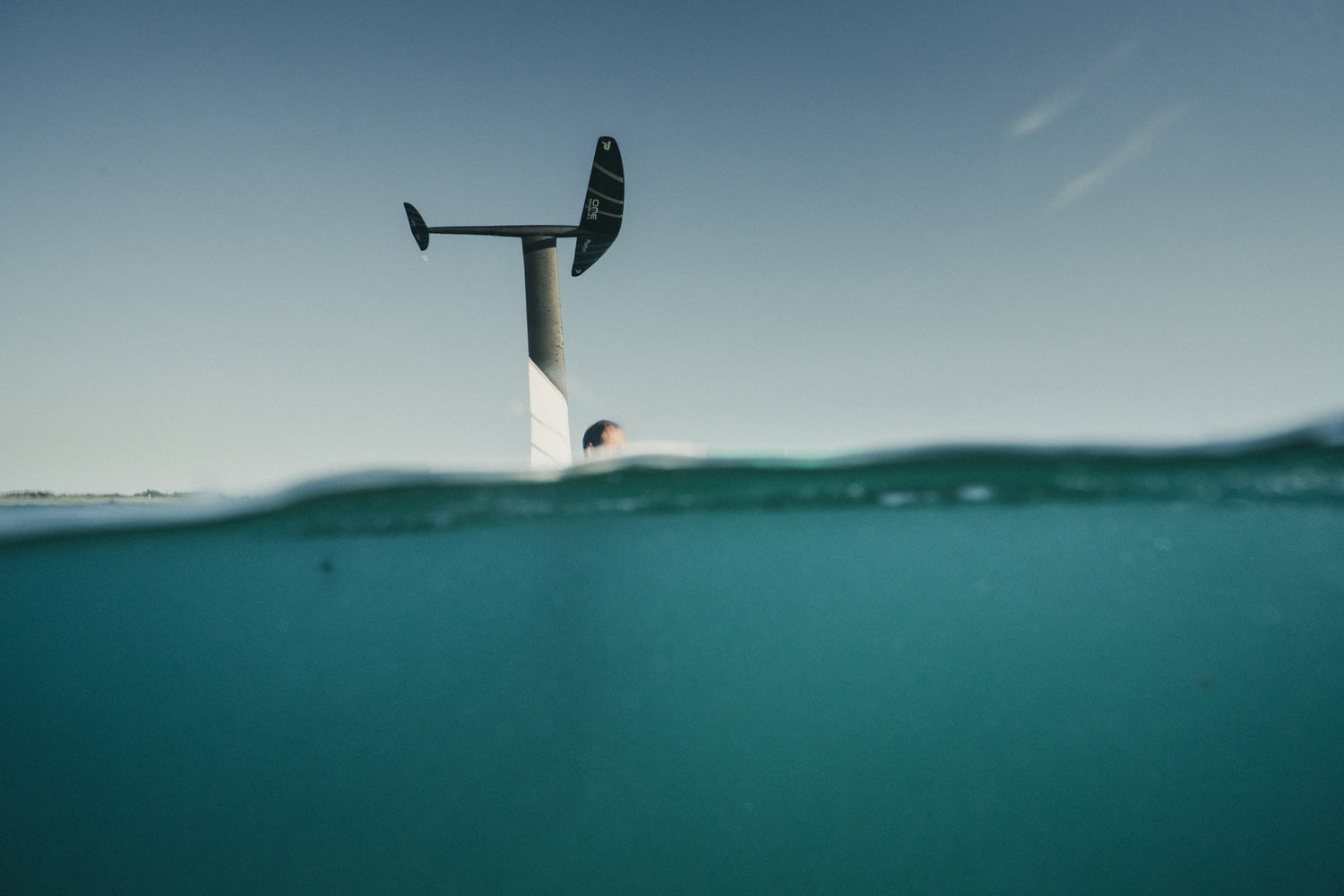
Freeride front wings such as the Phantom ONE range deliver smooth lift, predictable behaviour and excellent control while your skills develop.
For a more detailed comparison, see our guide to front wing size selection.
Choosing the right wing size
The handheld wing generates the power needed for take-off and should always be selected according to rider weight and wind strength.
Most beginners start with wings between 4.0 and 6.0 m², depending on local conditions.
Generally:
- Lighter riders benefit from smaller wings.
- Heavier riders often require larger wing sizes in moderate winds.
Choosing the right wing size improves comfort, reduces fatigue and makes progression much easier.
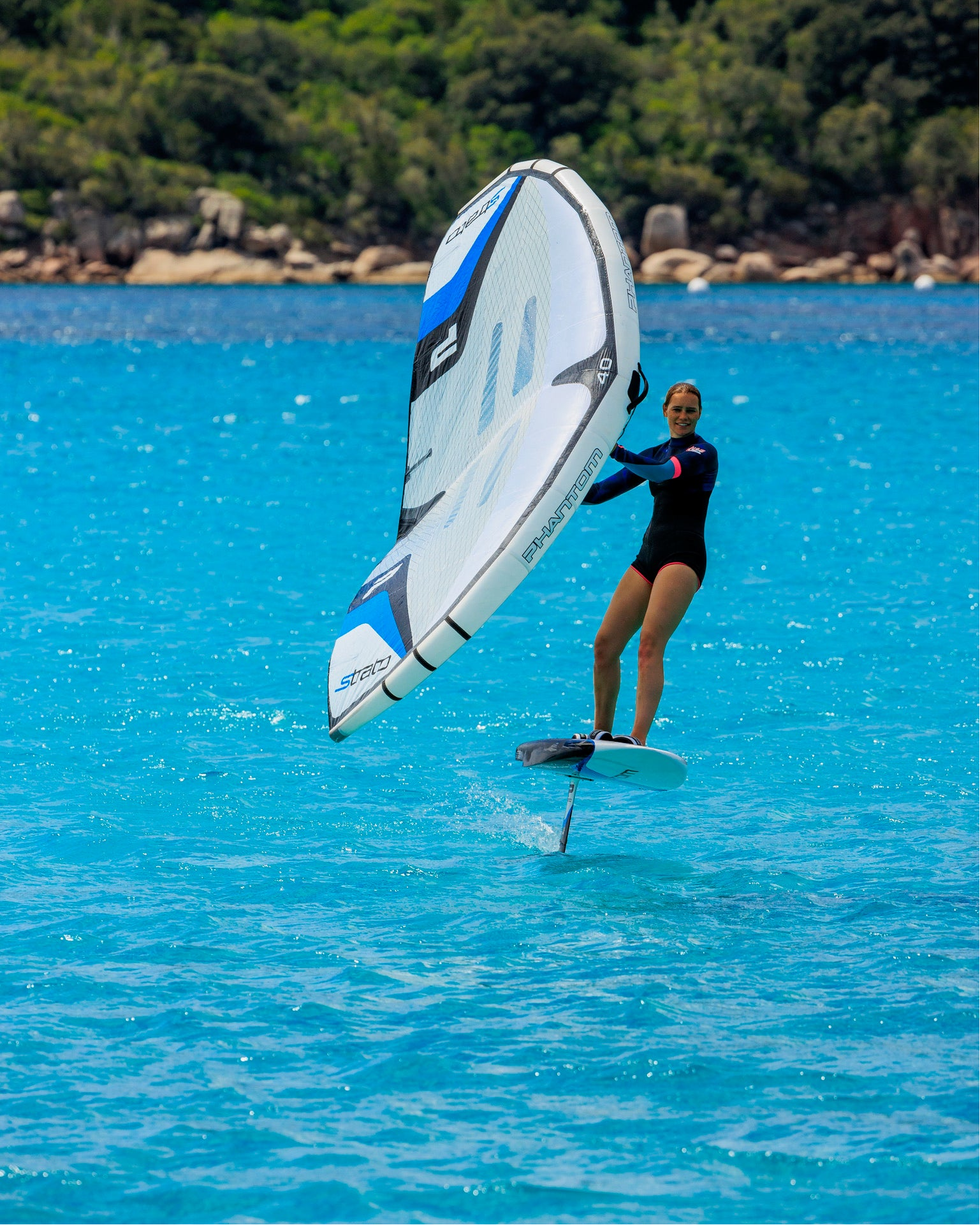
The Phantom STRATO range has been developed to deliver stable handling, progressive power and intuitive control across a wide wind range, making it an excellent choice for riders progressing from their very first flights.
Recommended mast length
Mast length influences both confidence and control during the learning process.
Shorter masts:
- Reduce fall height
- Make touchdowns easier
- Help riders learn foil control progressively
Typical beginner mast length:
70–80 cm
As confidence grows, riders usually move to longer masts for greater control and performance.
You can explore this further in our foil mast length guide.
Building a balanced beginner setup
The best beginner setup isn't about maximizing performance in a single area.
It's about finding the right balance between every component.
A typical beginner configuration includes:
- A stable board with sufficient volume
- A medium-to-large freeride front wing
- A wing size matched to rider weight and wind conditions
- A shorter mast for easier control
This balanced approach allows riders to experience their first controlled flights sooner while reducing fatigue and accelerating progression.
When should you upgrade?
As your confidence grows, your equipment can gradually evolve toward more responsive setups.
Typical signs that it's time to upgrade include:
- Consistent take-offs
- Longer controlled flights
- Confident transitions
- Improved pumping technique
At this stage, riders often reduce board volume, choose smaller front wings and fine-tune their wing size according to their riding style and local conditions.
You can explore this progression in our intermediate wing foil setup guide.
Continue building your setup
To refine your equipment even further, we also recommend:
How to choose your wing foil setup
What size front wing should I choose
Light wind wing foil setup
Together, these guides explain how each component influences stability, lift and glide efficiency.
Build the setup that matches your riding
The right setup doesn't just make wing foiling easier—it helps you progress faster, ride with more confidence and enjoy every session on the water.
Share:
Carbon vs aluminum foils: which one should you choose for wing foiling?
How to choose your wing foil setup