



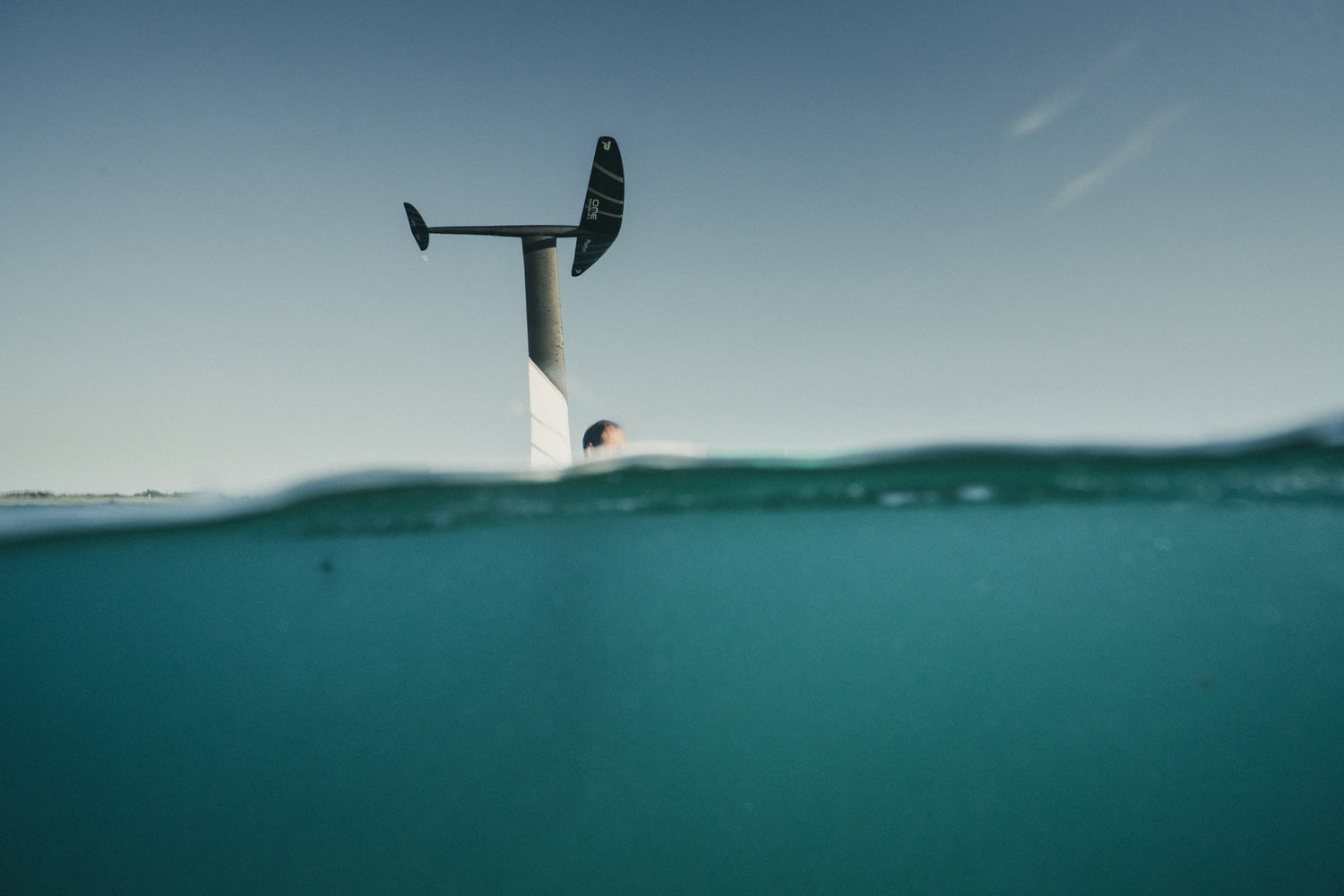
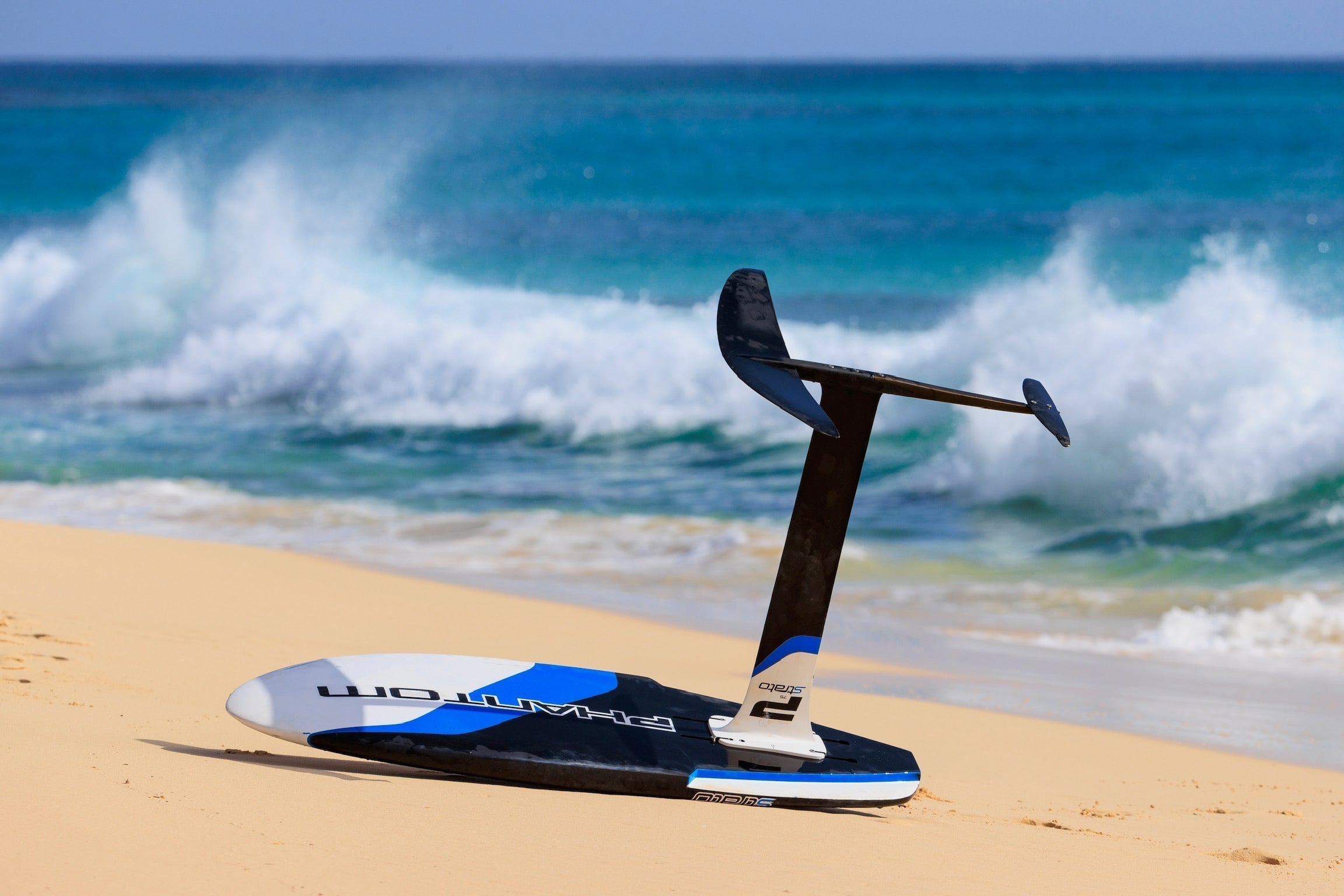
Choosing the right wing foil setup is essential to progress efficiently and enjoy consistent sessions across changing conditions. A balanced configuration depends on the interaction between four main elements: board volume, front wing size, mast length and wing surface.
Rather than choosing each component independently, experienced riders typically adjust their setup according to body weight, wind strength and riding programme. Understanding how these parameters work together helps create equipment combinations that remain efficient beyond the first sessions.
A great wing foil setup is all about balance
Every component plays a specific role, but none of them works in isolation. A larger front wing can reduce the wing size you need in lighter winds. A longer mast improves control in chop but requires greater confidence. A smaller board increases manoeuvrability while demanding more precise technique during take-off.
Understanding how these elements interact is the key to building a setup that feels balanced, efficient and perfectly adapted to your riding.
The four key elements of a wing foil setup
A wing foil setup is always the result of several interacting choices. Adjusting only one parameter rarely produces the expected result without considering the others.
The main components include:
- board volume
- front wing surface
- mast length
- wing size
Each of these influences stability, lift, control and glide in different ways.
Choosing the right board volume
Board volume determines how stable the board feels before take-off and how easily riders accelerate in marginal wind conditions.
Higher-volume boards provide:
- easier starts
- improved balance when stationary
- better comfort in light wind
- faster progression for beginners
Lower-volume boards offer:
- reduced swing weight
- improved manoeuvrability
- more direct control once flying
- better performance in stronger wind
As a general guideline:
Beginners typically ride boards 20 to 40 litres above body weight
Intermediate riders stay within 5 to 15 litres above body weight
Advanced riders often choose volumes close to or below their weight
For a more detailed approach, see our wing foil board volume guide.
Boards such as the Phantom Strato freeride range provide versatile sizing options across multiple rider profiles, while mid-length shapes like the Cirrus improve glide efficiency in lighter wind conditions.
Selecting the correct front wing size
Front wing surface has the strongest influence on take-off speed and overall lift.
Larger front wings:
- generate earlier lift
- improve pumping efficiency
- increase stability at low speed
- support light-wind riding
Smaller front wings:
- increase top speed
- improve manoeuvrability
- reduce drag
- suit stronger wind conditions
Matching front wing size to rider weight and local conditions is essential for maintaining a predictable setup. For a deeper explanation, read our front wing size guide.
Front wings such as the PHANTOM one series cover a wide range of surfaces adapted to progression from intermediate to advanced riding.
Choosing the right mast length
Mast length affects both control and safety during early sessions as well as performance once progressing.
Shorter masts typically provide:
- easier learning phases
- reduced fall height
- more confidence during take-off attempts
Longer masts allow:
- better control in chop
- increased carving freedom
- improved upwind angles
- greater efficiency at speed
Most riders progressively increase mast length as their confidence improves.
Carbon mast constructions also improve stiffness and stability across changing speeds. You can explore this further in our guide on foil mast stiffness and performance.
How to select the right wing size
How to select the right wing size
Wing surface should always be chosen according to rider weight and wind strength rather than board size alone.
Larger wings provide:
- earlier take-off
- better pumping support
- increased efficiency in marginal wind
Smaller wings offer:
- improved control in strong wind
- higher riding speed
- reduced fatigue over long sessions
Choosing the right balance helps maintain control across a wider wind range. Our wing size guide explains how to adapt wing surface to changing conditions.
Wings such as the Phantom Strato range are designed to remain stable across multiple wind strengths while maintaining efficient power delivery during progression phases.
Adjusting your setup for light wind conditions
Light wind sessions require careful coordination between board volume, front wing surface and wing size.
Typical adjustments include:
- slightly higher board volume
- larger front wing surface
- increased wing area
- efficient pumping technique
Mid-length boards such as the Phantom Cirrus help maintain glide during acceleration phases and improve take-off consistency in marginal wind conditions.
You can explore this configuration further in our light wind wing foil setup guide.
Beginner wing foil setup recommendations
Beginners benefit from stable and forgiving configurations that support early take-off attempts.
Typical beginner setups include:
- board volume +30 litres above body weight
- larger front wing surface
- medium mast length
- slightly oversized wing surface
This combination improves balance during the first sessions while reducing fatigue and accelerating progression. For a step-by-step configuration approach, see our beginner wing foil setup guide.
Intermediate wing foil setup: when should you upgrade?
As riders improve their take-off consistency and control, equipment can progressively shift toward smaller and more responsive configurations.
Typical intermediate adjustments include:
- reducing board volume
- selecting smaller front wings
- increasing mast length
- refining wing surface choice
These changes allow smoother manoeuvres and improved glide efficiency while maintaining stability across varied conditions.
Building a setup adapted to your riding programme
Wing foil setups vary significantly depending on riding goals.
Freeride-oriented riders usually prioritise accessibility and versatility across wind strengths.
Wave-oriented riders often prefer compact boards and responsive front wings for carving behaviour.
Downwind-oriented riders typically combine mid-length boards with high-aspect foils optimised for glide efficiency.
Understanding these programme differences helps riders select equipment that supports long-term progression rather than short-term comfort only.
You can explore this approach further in our guide to downwind foil setups.
Recommended next steps when building your wing foil setup
To refine your configuration further, you may also want to read:
- Wing foil board volume guide
- Front wing size guide
-
Carbon vs aluminum foils
- Beginner wing foil setup guide
Together, these resources explain how each component influences lift, stability and control across different riding conditions.
Build a setup adapted to your level and conditions
A balanced wing foil setup improves take-off efficiency, stability and long-term progression on the water. Explore the Phantom foil and board ranges to configure equipment suited to your riding style and local conditions.
Share:
Beginner wing foil setup guide: choosing the right equipment to start wing foiling
Wing foil board size guide: how to choose the right volume