



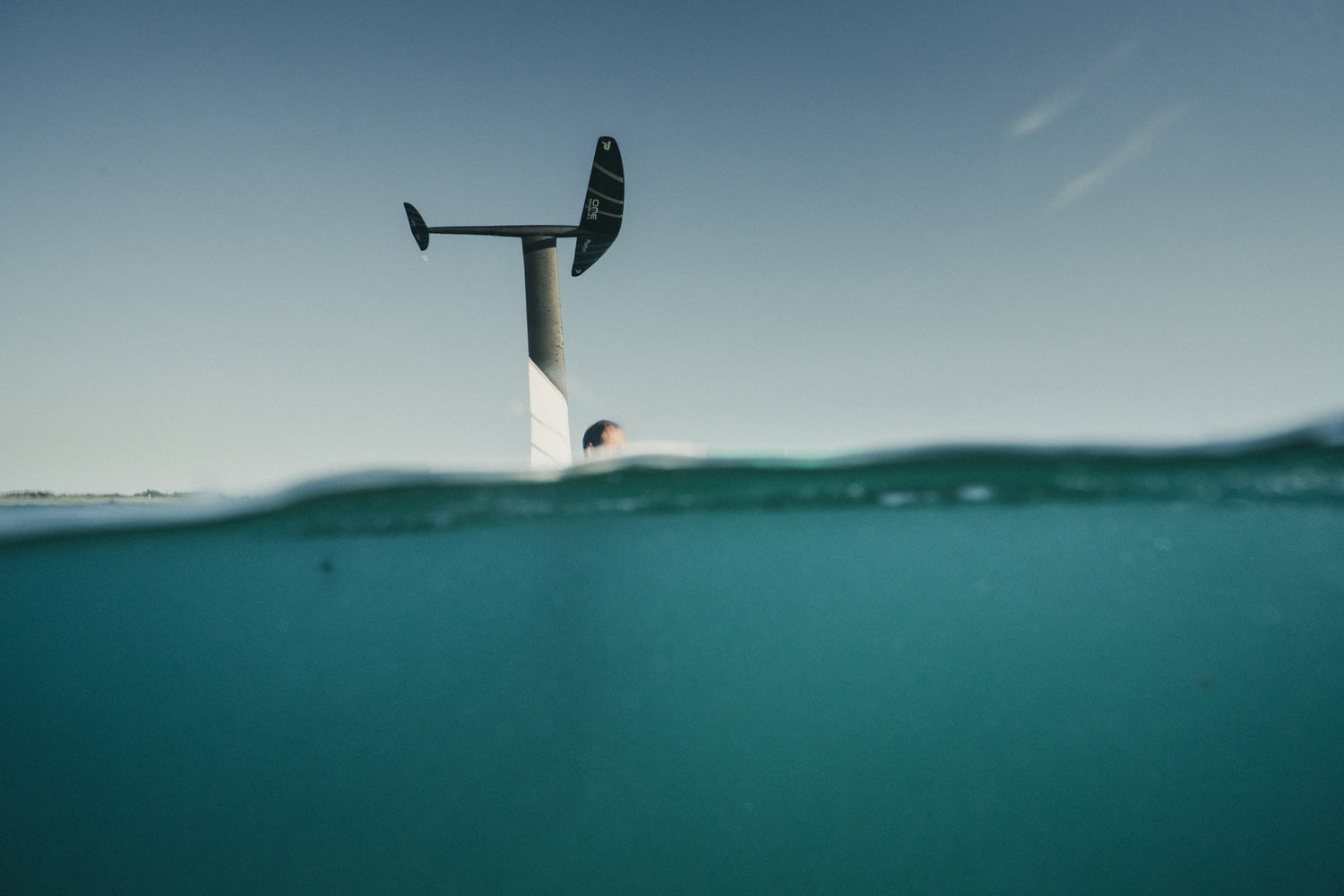
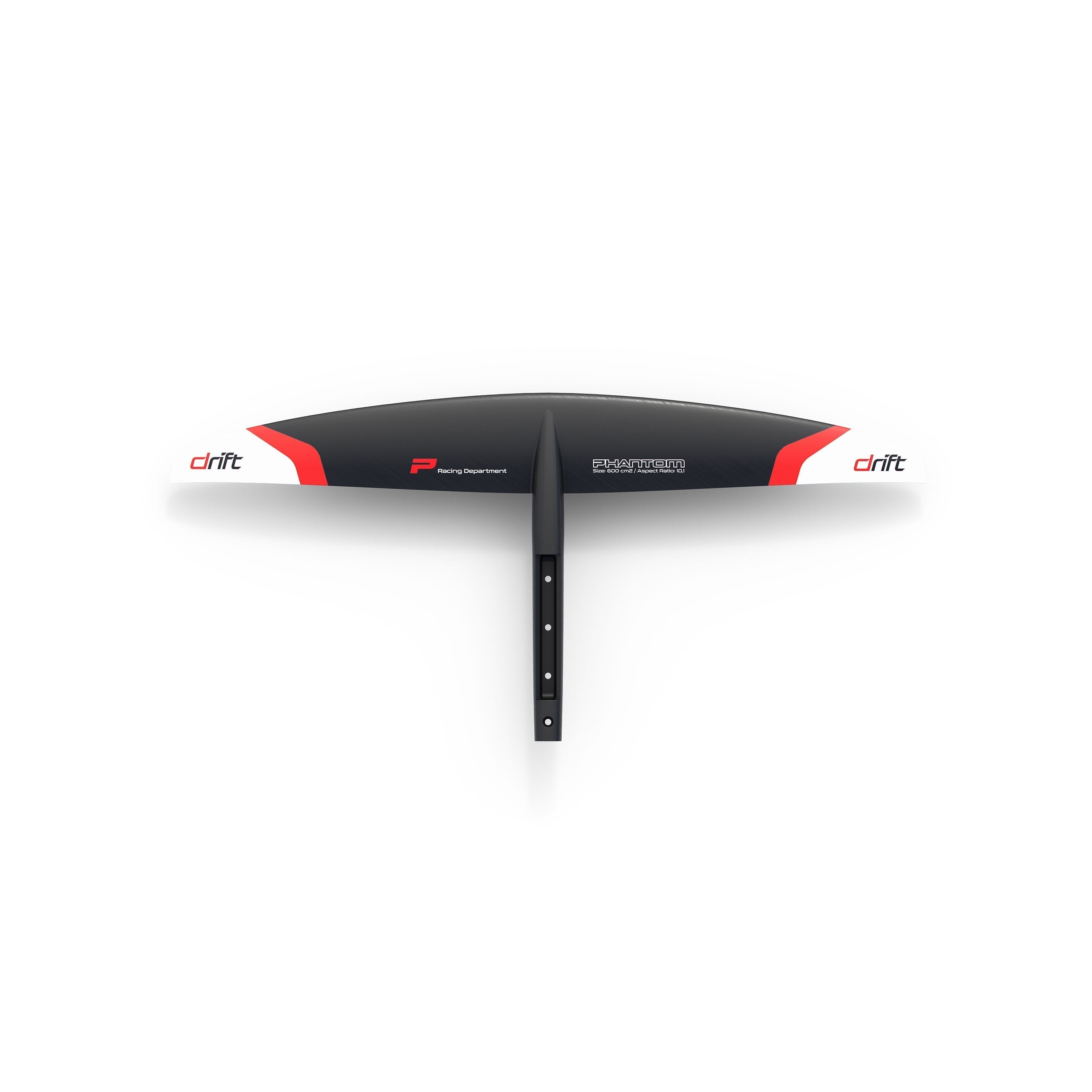
Front wing size is one of the most important parameters when building a wing foil setup. It directly influences take-off speed, stability, glide efficiency and manoeuvrability on the water.
Choosing the right surface area depends on rider weight, wind strength and riding programme. Understanding how these elements interact helps riders select a front wing that supports both progression and performance across changing conditions.
If you are building a complete configuration, you may also want to read our wing foil setup guide to understand how each component works together.
Why front wing size matters in wing foiling
The front wing generates the lift that allows the board to rise above the water. Its surface area determines how early take-off happens and how stable the setup feels at low speed.
Larger front wings typically provide:
- earlier lift
- improved pumping efficiency
- more stability during take-off
- better performance in light wind
- Smaller front wings generally offer:
- higher top speed
- reduced drag
- more reactive carving behaviour
- improved control in strong wind
Selecting the correct size allows riders to balance accessibility and responsiveness depending on their level and conditions.
How rider weight influences front wing selection
Rider weight plays a major role in determining the correct front wing surface.
Heavier riders require more lift and therefore benefit from larger wings.
Lighter riders can typically use smaller surfaces while maintaining early take-off efficiency.
As a general guideline:
-
Light riders (under 65 kg)
typically ride 700–1000 cm² front wings -
Medium riders (65–85 kg)
typically ride 900–1300 cm² front wings - Heavier riders (85 kg and above)
often use 1100–1600 cm² front wings depending on wind strength
These values vary depending on board volume and foil profile. For a complete setup approach, see our wing foil board volume guide.
Choosing front wing size according to wind conditions
Wind strength strongly affects front wing selection.
In light wind conditions, larger front wings improve early lift and reduce the energy required for take-off. They also help maintain flight through lulls.
In stronger wind, smaller wings provide better control and allow higher riding speeds with reduced drag.
Matching wing surface to local conditions helps riders maintain consistent performance across sessions.
Front wing size for beginners, intermediate and advanced riders
Experience level also influences the optimal front wing choice.
Beginner riders
Beginners benefit from larger front wings that provide stability and predictable lift during early sessions.
Typical beginner range:
1200–1600 cm², a surface area commonly used in freeride front wings such as the Phantom Strato range designed for accessible lift and stable progression.
For a step-by-step configuration approach, see our beginner wing foil setup guide.
Intermediate riders
Intermediate riders usually transition toward medium-sized front wings that improve glide while maintaining stability.
Typical intermediate range:
900–1300 cm²
These sizes support smoother transitions between manoeuvres and increased speed control.
Front wings such as the Phantom Strato front wings provide a balanced combination of lift, glide and manoeuvrability across this progression phase.
Advanced riders
Experienced riders often select smaller or higher-aspect front wings depending on their riding style.
Typical advanced range:
700–1000 cm²
These wings provide faster acceleration and more dynamic carving behaviour once take-off becomes consistent.
Understanding aspect ratio and front wing performance
Surface area alone does not define front wing behaviour. Aspect ratio also plays a major role in glide efficiency and turning characteristics.
High-aspect wings typically provide:
- better glide efficiency
- improved pumping distance
- higher top speed
- increased efficiency for downwind riding
- Lower-aspect wings usually offer:
- smoother take-off behaviour
- tighter turning radius
- more forgiving control
- improved accessibility for progression
You can explore this further in our guide to high aspect foils explained.
Matching front wing size with your riding programme
Front wing choice depends strongly on how and where you ride.
Freeride riders typically choose medium-sized wings that balance stability and manoeuvrability.
Wave-oriented riders often prefer compact wings that improve responsiveness and carving behaviour.
Downwind riders usually select high-aspect wings designed for glide efficiency and sustained flight over longer distances. You can explore this further in our guide to downwind foil setups.
Front wings such as the Phantom Strato freeride series are designed to cover a wide range of rider weights and riding styles while maintaining efficient lift, early take-off and predictable control across changing conditions.
How front wing size interacts with board volume and mast length
Front wing size should never be chosen in isolation.
Larger wings often work best with slightly higher board volume to support early take-off. Smaller wings typically pair well with compact boards designed for manoeuvrability.
Mast length also influences stability and control depending on wing surface and riding speed. Understanding this interaction helps riders build a setup that remains balanced across conditions.
Recommended next steps when choosing your wing foil setup
To refine your configuration further, you may also want to read:
Together, these resources explain how front wing size interacts with the rest of your equipment.
Choose a front wing adapted to your riding conditions
Selecting the right front wing size improves take-off efficiency, stability and glide performance across all wind strengths. Explore the Phantom front wing range to identify the surface best suited to your level and riding style.
→ Discover Phantom front wings
Share:
Carbon vs aluminum foils: which one should you choose for wing foiling?