



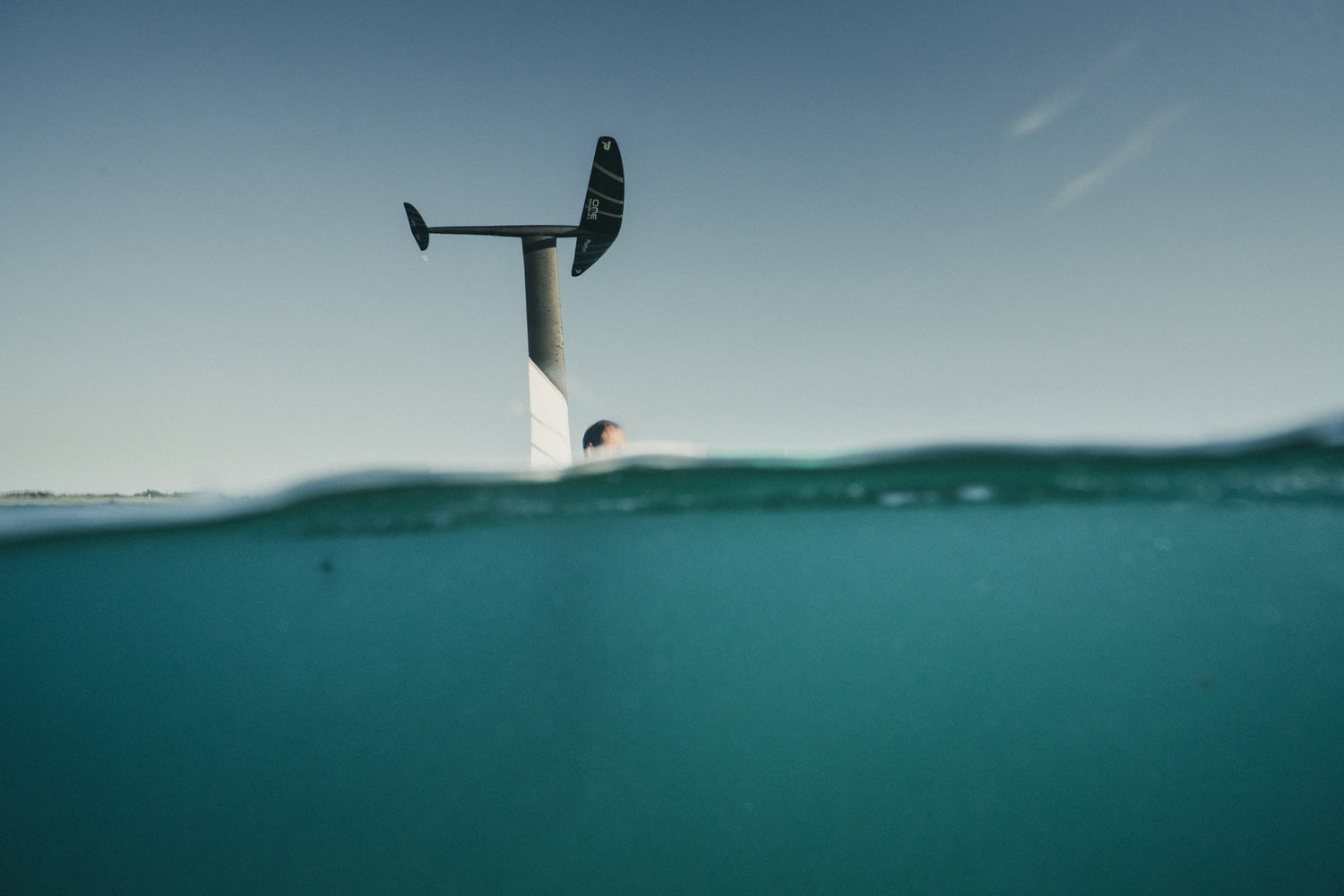
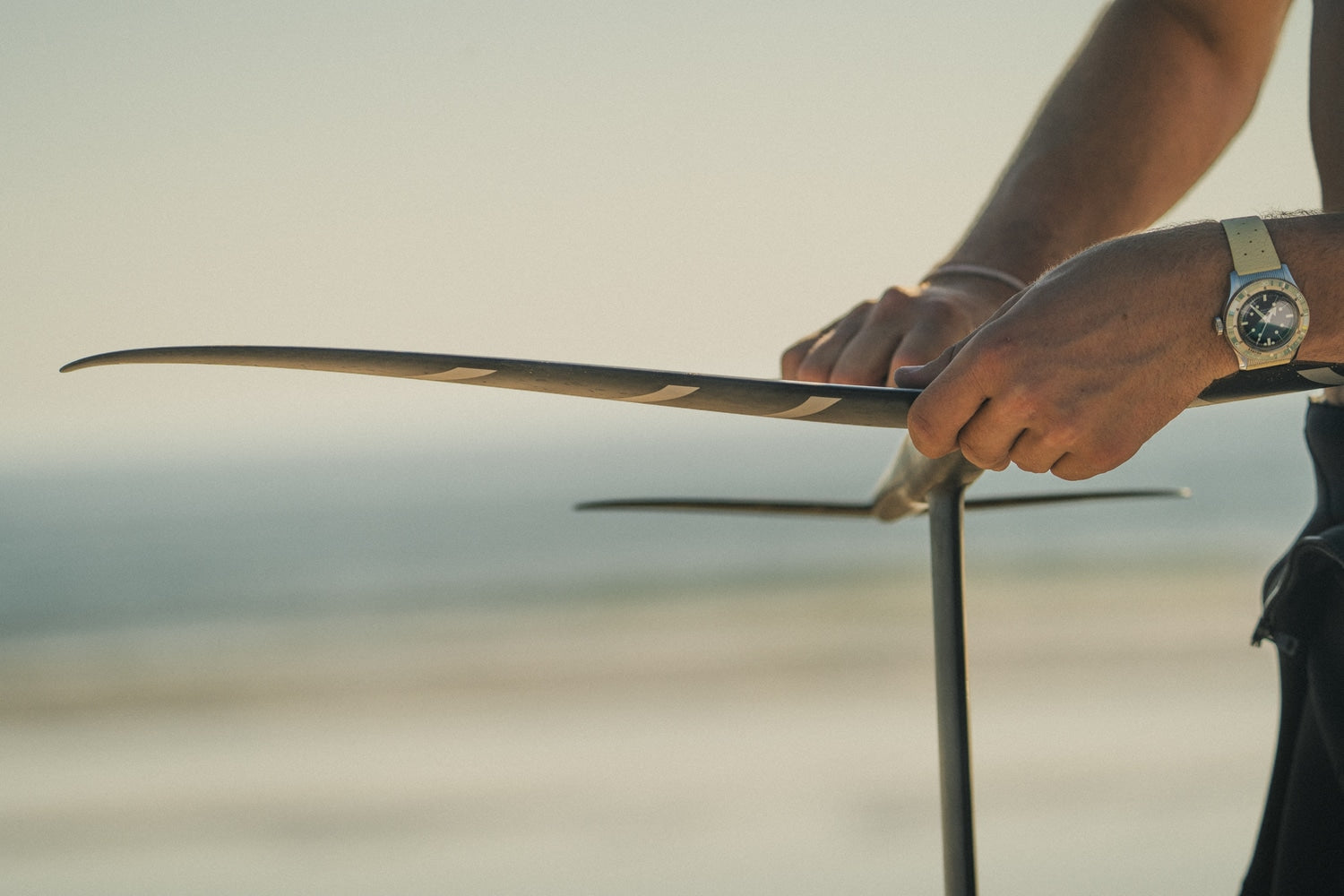
High aspect foils are increasingly used in wing foiling because they improve glide efficiency, reduce drag and allow riders to connect longer flight phases across open water.
Compared with low aspect freeride foils, they are designed to maximise forward projection rather than early lift alone. Understanding how aspect ratio affects foil behaviour helps riders choose equipment adapted to their riding style and progression goals.
If you are still building your first configuration, start with our wing foil set up guide.
What does “high aspect” mean in foil design?
Aspect ratio describes the relationship between a foil’s span and its surface area.
High aspect foils are longer and narrower.
Low aspect foils are shorter and wider.
This geometric difference directly influences how a foil behaves on the water.
Higher aspect ratios typically generate:
- more glide efficiency
- higher cruising speed
- reduced drag
- longer flight distance
- smoother swell connection
Lower aspect ratios usually provide:
- earlier take-off lift
- stronger low-speed support
- increased roll stability
- easier accessibility for beginners
- Understanding this distinction helps riders select the correct foil platform for their riding programme.
Why high aspect foils glide more efficiently
High aspect foils reduce induced drag by distributing lift more evenly along the wingspan.
This allows riders to:
- maintain speed with less effort
- pump more efficiently
- connect swell lines more easily
- extend flight distance between transitions
These characteristics make high aspect geometry particularly effective in freeride progression and downwind environments.
You can explore this further in our front wing size guide.
When should you switch to a high aspect foil?
Riders usually transition toward higher aspect ratios once take-offs become consistent and pumping improves.
Typical indicators include:
- stable flight control in moderate wind
- longer glide phases between manoeuvres
- improved pumping coordination
- interest in downwind riding
- exploration of open-water swell conditions
At this stage, higher efficiency becomes more valuable than maximum lift stability.
High aspect foils for freeride progression
In freeride wing foiling, high aspect foils allow riders to extend flight distance while maintaining predictable control.
Compared with entry-level foils, they provide:
- smoother acceleration
- better upwind angles
- increased glide between transitions
- reduced rider fatigue
Foil platforms such as the Phantom Hurricane freeride range are designed to support this type of progression.
High aspect foils for downwind riding
Downwind foiling relies heavily on glide efficiency rather than continuous wing power.
High aspect foils make it easier to:
connect bumps
- maintain flight in low-energy swell
- reduce pumping effort
- sustain long-distance glide
This makes them a natural choice for riders exploring SUP downwind or parawing environments.
You can explore this further in our downwind foiling guide.
Are high aspect foils harder to ride?
High aspect foils require slightly more control during take-off but become easier to manage once flying.
Compared with low aspect foils, they typically:
- require more precise pumping technique
- feel faster underfoot
- offer longer glide phases
- respond more directly to rider input
With modern foil design, however, many high aspect platforms remain accessible to intermediate riders.
Choosing the right high aspect foil size
Selecting the correct surface area remains essential when switching to higher aspect geometry.
Larger high aspect foils:
- improve early lift
- support heavier riders
- perform better in light wind
Smaller high aspect foils:
- increase speed
- improve manoeuvrability
- enhance carving precision
Understanding this balance helps riders optimise glide without sacrificing control.
High aspect vs low aspect: which one should you choose?
Low aspect foils remain ideal for:
- beginner progression
- early take-off stability
- compact manoeuvres
- learning pumping technique
High aspect foils are better suited for:
- intermediate progression
- freeride efficiency
- longer glide phases
- downwind riding
Most riders progressively transition toward higher aspect geometry as their control improves.
Recommended next steps when refining your foil setup
To refine your configuration further, you may also want to read:
How to choose your wing foil setup
What size front wing should I choose
How carbon mast stiffness improves stability and speed in wing foiling
Together, these guides explain how foil geometry interacts with board size, mast stiffness and riding programme.
Extend your glide with high-efficiency foil geometry
High aspect foils unlock longer flight phases, smoother acceleration and improved pumping efficiency across freeride and downwind conditions.
Discover the Phantom Hurricane foil platform designed for sustained glide performance and control.
Share:
Wing foil board size guide: how to choose the right volume
How carbon mast stiffness improves stability and speed in wing foiling